
Blog Post
9Wickets KYC Guide: Errors, Rules & Identity Checks
Published 11 November 2026 Updated 12 November 2026
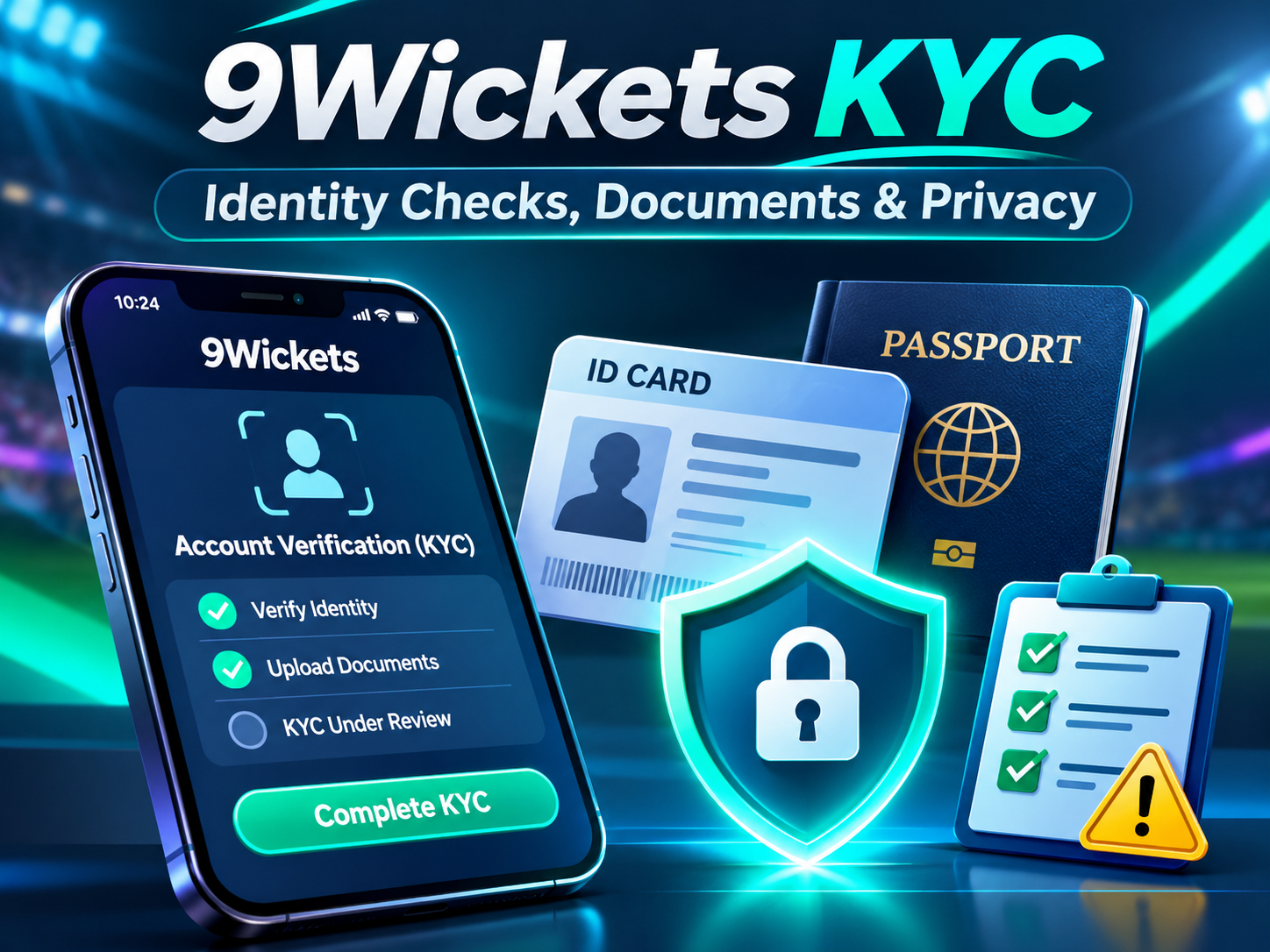
9Wickets KYC Guide: Errors, Rules & Identity Checks
Introduction
9Wickets KYC raises several important questions about online identity checks, document accuracy, account ownership, and personal information security. People who research this subject often want to understand what happens when an identity document contains incorrect details, why a verification system may flag an account, and how an individual can distinguish a genuine verification request from a suspicious one.
KYC stands for Know Your Customer. Organisations use this process to establish customer identity, assess eligibility, and support certain financial or security requirements.
The 9wkts.io website publishes information about its own identity verification procedures. Its FAQ identifies a National Identity Card (NID) or passport, together with a document photograph and selfie, as possible verification materials. The same page says that its process begins when someone submits a first withdrawal request.
However, a published verification procedure does not establish that a website holds independent regulatory approval or meets every security requirement. Readers should evaluate the operator, its documentation, and the laws that apply to their location.
Bangladesh also introduced the Gambling Prevention Act, 2026, which addresses online gambling and online betting through specific legal provisions. Consequently, anyone researching an online betting-related service should distinguish technical identity checks from legal permission.
This guide takes a practical approach to 9Wickets KYC. It examines common identity discrepancies, document-quality issues, account ownership questions, verification complaints, fraud indicators, and the importance of understanding Bangladesh’s legal framework.
1. Start With the Difference Between Registration and KYC
Registration and identity verification serve different purposes.
Registration generally creates an initial user record. A website may collect basic details such as a name, mobile number, email address, and login credentials.
KYC goes further. It examines supporting information to establish whether the person behind an account matches the identity details supplied to the organisation.
These two activities can produce different outcomes.
For example, a website might accept a mobile number and create an initial account record without examining a government-issued document. Later, the organisation may request additional identification information to resolve an ownership question or meet its declared verification requirements.
The distinction matters because a successful registration does not automatically confirm someone’s identity.
Readers should also distinguish mobile OTP verification from government-document verification.
An OTP confirms access to a particular telephone number at a particular moment. It does not independently prove the legal identity of the person controlling that number.
Similarly, a valid NID does not automatically establish ownership of every mobile wallet or bank account associated with an individual.
Understanding these differences helps readers assess verification claims more accurately.
2. What the 9Wickets FAQ Says About Verification
The published FAQ on 9wkts.io provides several details about its stated KYC requirements.
According to that page:
- The platform identifies a valid NID or passport as an identification document.
- It asks for a photograph or scan of the document.
- It also mentions a selfie for identity matching.
- Its FAQ connects the verification process with the first withdrawal request.
- Its published policy requires users to meet a minimum age of 21.
The responsible gaming page also describes age verification through government identification.
These details help readers understand the website’s published procedures. However, they do not establish the performance of its internal verification technology or the accuracy of every claim in its documentation.
A further distinction concerns the domain itself. Information from 9wkts.io does not automatically apply to another website that uses the 9Wickets name.
Before relying on any verification statement, readers should check the complete domain and identify the organisation responsible for the service.
3. Six Common Types of Identity Verification Problems
Identity-checking systems can encounter inconsistencies for several reasons. Some problems concern document quality, while others involve differences between personal records.
Name Inconsistencies
A name may appear differently across records because of spelling variations, shortened forms, or changes in personal information.
For example, one record might contain a person’s full legal name while another contains a shortened version.
A verification system may identify that difference and request further examination.
Date of Birth Discrepancies
An incorrect date of birth can create a serious identity mismatch.
A person might enter a date incorrectly or provide information that differs from the official document.
Because age checks can determine eligibility, an organisation should examine such discrepancies carefully.
Unclear Document Images
A photograph may contain glare, shadows, motion blur, or cropped information.
These problems can prevent an examiner from reading important document details.
A digital image may look clear on a mobile screen but still contain insufficient detail for accurate examination.
Expired Identification
An expired document may not satisfy an organisation’s published acceptance criteria.
Acceptance rules differ across organisations and jurisdictions, so individuals should consult the relevant documentation rather than assume that every expired identification record receives the same treatment.
Unmatched Photographs
A selfie may not provide enough visual information for a reliable comparison.
Lighting, camera quality, image compression, and differences between photographs can affect the result.
Inconsistent Contact Information
A telephone number, email address, or residential detail may differ between an initial record and later documentation.
Such inconsistencies can create additional questions about account ownership.
These examples explain general identity-verification challenges. They do not represent a confirmed list of internal 9Wickets rejection codes or decision rules.
4. Why Verification Systems Need Accurate Source Information
An identity-checking system relies on the quality of the information it receives.
Incorrect information can create problems even when an individual has no intention to misrepresent their identity.
Consider a hypothetical example.
A person enters their date of birth incorrectly while completing an online form. Later, an examiner compares the submitted information with the date printed on an official identity document.
The two records do not match.
An automated system may flag the discrepancy, while a human reviewer may need additional context to understand its cause.
This example illustrates an important principle: an identity verification result depends on the information and evidence available to the organisation.
Accuracy matters for several reasons:
- It reduces inconsistencies between personal records.
- It helps organisations distinguish genuine identity claims from suspicious submissions.
- It supports more reliable age assessment.
- It reduces unnecessary disputes.
- It helps maintain clear records for future examination.
However, accuracy does not mean that an individual should send additional sensitive documents whenever a website requests them. First, the individual should establish the organisation’s identity, the reason for the request, and the security of the communication channel.
5. How to Evaluate an Identity Verification Request
A document request deserves careful examination before anyone shares confidential information.
Instead of judging a message by its appearance, readers should evaluate its origin, purpose, and supporting information.
Examine the Sender
Check the complete email address or website domain.
A familiar brand name in a display name does not establish that the sender represents the actual organisation.
Check the Stated Purpose
A legitimate identity verification request should explain what information the organisation needs and why it needs that information.
Vague explanations provide little basis for an informed privacy decision.
Review the Document Requirements
Check whether the requested information matches the organisation’s published policy.
A request for an unrelated document deserves additional scrutiny.
Examine the Communication Channel
Avoid sending identity photographs to an unknown personal account or unverified messaging profile.
Look for an independently confirmed contact method.
Read the Privacy Terms
Review the organisation’s explanation of storage, retention, access, and third-party sharing.
These details help individuals understand the consequences of disclosing personal records.
Consider the Legal Context
A website’s request for identification does not automatically make its services lawful.
The legal position depends on the applicable laws and the actual activity involved.
6. Account Ownership: Why One Person’s Identity Matters
Account ownership creates an important connection between personal identity and digital activity.
An organisation may associate an account with a particular person through several types of information.
These records can include:
- Legal identity details.
- Registered telephone numbers.
- Email addresses.
- Account creation records.
- Device and login information.
- Transaction references.
- Communication history.
Each category provides different information about account activity.
For example, a telephone number can establish access to a communication channel, while an identification document can support a claim about legal identity.
Neither record automatically establishes every other aspect of account ownership.
Account sharing can create additional complications. When multiple individuals use the same credentials, an organisation may struggle to determine who performed a particular action.
Shared access can also increase the risk of unauthorised changes or exposure of confidential information.
For these reasons, digital identity systems generally place importance on clear ownership records and controlled access.
7. Understanding Duplicate Accounts and Identity Conflicts
Some online organisations establish account policies that restrict individuals to one account.
The published 9wkts.io FAQ states that its platform permits one account per player and treats duplicate accounts as a breach of its terms.
That is the website’s stated policy. It does not independently establish how its systems identify every duplicate-account situation.
Identity conflicts can arise in several ways.
Accidental duplication: Someone may create another account after forgetting earlier registration details.
Contact-number changes: A person may lose access to an old telephone number and later register using a new one.
Shared devices: Several people may access the same computer or mobile device.
Conflicting records: Different account details may create uncertainty about whether two records belong to one individual.
Unauthorised access: Someone else may attempt to use another person’s information.
These scenarios require different assessments. A shared device alone does not prove common account ownership, and similar personal details do not always establish fraud.
Organisations should distinguish genuine account conflicts from deliberate misrepresentation.
Readers should never create additional accounts or submit another person’s identity documents to work around an identity dispute.
8. What Should a Verification Complaint Contain?
A clear complaint helps an organisation understand the issue without requiring unnecessary disclosure of sensitive information.
Someone who wants to question an identity-related decision can organise their communication around a few important points.
Identify the Relevant Record
Provide the reference number or other non-sensitive identifier that helps the organisation locate the relevant matter.
Avoid including complete identity numbers in an unsecured email unless a verified process specifically requires them.
Explain the Problem
Describe the issue in straightforward language.
For example, the complaint may concern an incorrect personal detail, an unclear explanation, or an unexpected request for additional information.
Identify the Requested Resolution
Explain what clarification or correction you seek.
A clear request helps the receiving organisation understand the purpose of the communication.
Ask About Data Handling
Where appropriate, ask which information the organisation currently holds and why it needs any additional records.
Preserve the Response
Keep the organisation’s reply and any relevant reference numbers.
These records may help if the individual needs to escalate a complaint through an appropriate channel.
This section provides general consumer communication guidance. It does not guarantee a particular outcome or describe an official 9Wickets dispute-resolution procedure.
9. Security Warning Signs That Deserve Attention
Identity theft often begins with a request that appears ordinary.
Criminals may imitate familiar organisations and use convincing messages to collect documents, passwords, or authentication codes.
The following warning signs deserve particular attention.
Unofficial Document Collection
An unknown individual asks for an NID photograph through a personal social media profile.
Unexpected Authentication Requests
Someone asks for an OTP or login password while claiming to investigate a verification problem.
Unexplained Fees
A message demands an unusual payment to unlock an identity record or resolve an alleged document problem.
Threatening Communication
The sender creates artificial urgency and threatens immediate consequences unless the recipient sends confidential information.
Unclear Data Destinations
The request does not explain which organisation receives the documents or where the organisation stores them.
Inconsistent Website Addresses
A message contains a domain that resembles a familiar name but includes additional characters or unusual spelling.
A cautious approach helps individuals avoid disclosing sensitive information to unverified recipients.
10. Digital Evidence and Record Keeping
Digital evidence can help individuals understand and investigate identity-related problems.
An organised record of relevant communication can also reduce confusion when several messages arrive from different sources.
Useful records may include:
- Original emails and message headers.
- Complete website addresses.
- Screenshots showing the date and time.
- Verification reference numbers.
- Copies of relevant privacy notices.
- Correspondence with the organisation.
- Financial transaction references, where relevant.
Individuals should preserve original files whenever possible.
A screenshot may help explain what appeared on a screen, but it does not always contain the complete technical information found in an original email or document.
Avoid editing evidence in ways that remove relevant details.
At the same time, do not circulate unredacted identification documents when a complaint only requires a general description of the problem.
11. What to Do When You Suspect Identity Misuse
Identity misuse requires a response that matches the type of information involved.
If someone obtains an individual’s login credentials, the immediate priority concerns account access.
If someone obtains an identity document, the potential consequences may extend beyond one website.
A sensible response includes several actions.
Secure affected accounts. Change compromised passwords and strengthen authentication.
Review account activity. Look for unfamiliar access, unexpected profile changes, or suspicious communications.
Contact relevant providers. Notify the bank, mobile financial service, or other organisation when the incident affects its records.
Preserve evidence. Keep the original communication, document references, and relevant dates.
Contact appropriate authorities. Report suspected identity theft, fraud, or unauthorised financial activity through the appropriate official channels.
Request information from the organisation. Ask whether it holds affected records and whether an incident occurred.
Do not assume that one report resolves every consequence. Different service providers and authorities may need separate notifications.
12. What the 9wkts Privacy Policy Says About Security
The 9wkts.io privacy policy describes several technical and organisational measures that the website says it uses to protect personal information.
These include:
- SSL/TLS encryption for information transmitted between a device and the website.
- Encrypted storage for sensitive records, according to the published policy.
- Access restrictions for authorised personnel.
- Third-party service arrangements for specific operational functions.
- Procedures for responding to data incidents.
- Retention limits for different information categories.
The policy also describes its approach to user requests involving access, correction, deletion, and other privacy matters.
These statements provide information about the organisation’s declared security commitments.
However, readers should distinguish between a written commitment and independently verified security performance.
An SSL certificate, for example, can protect data in transit. It cannot independently establish how the organisation manages employee access, secures databases, handles external providers, or responds to an internal security incident.
A balanced evaluation should consider both the published documentation and any available independent evidence.
13. Bangladesh Law: A Separate Question From KYC
Readers in Bangladesh must consider the legal framework surrounding online gambling and betting.
The Gambling Prevention Act, 2026, officially titled জুয়া প্রতিরোধ আইন, ২০২৬, is Act No. 98 of 2026. The official Bangladesh Laws portal records its date as 1 July 2026.
The legislation addresses gambling, online gambling, remote gambling, and online betting.
Several provisions deserve attention:
- Section 4 addresses gambling offences.
- Section 5 addresses online or remote gambling offences.
- Section 6 addresses online betting offences.
- Section 15 establishes penalties for offences under Section 4.
- Section 16 establishes penalties for offences under Section 5.
- Section 17 establishes penalties for offences under Section 6.
Section 16 provides for imprisonment of up to five years, a fine of up to Tk 1 crore, or both for the relevant offence.
Section 17 provides for imprisonment of up to seven years, a fine of up to Tk 5 crore, or both for the relevant offence.
The legal distinction matters because KYC procedures concern identity verification, whereas gambling legislation concerns the legality of particular activities.
A website cannot establish legal permission simply by publishing a document verification policy or an age requirement.
Anyone researching this subject should consult the official statutory text and seek advice from a qualified Bangladeshi lawyer when necessary.
14. How to Read KYC Information Without Confusing Policy With Proof
Online articles sometimes repeat statements from a website without explaining where those statements originate.
That approach can create confusion between official claims and independently established facts.
A more careful research method separates information into three categories.
Category One: Directly Published Information
This includes requirements and procedures that a website explicitly describes in its own documentation.
For example, the 9wkts.io FAQ identifies NID or passport documents and a selfie as possible verification materials.
Category Two: General Industry Knowledge
This includes broader explanations of identity verification, document matching, OTP authentication, and information security.
These concepts may apply to many digital services, but they do not prove that a particular website uses every described method.
Category Three: Independently Verified Information
This includes evidence from government records, recognised regulatory sources, independent audits, and other reliable third-party material.
This category helps readers examine claims beyond the website’s own descriptions.
A responsible article should identify which category supports an important statement.
This distinction improves the accuracy of information about 9Wickets KYC and reduces the risk of presenting assumptions as established facts.
15. Frequently Overlooked Questions Before Trusting a Verification Policy
A document checklist alone cannot answer every question about an identity verification system.
Readers should also consider the wider responsibilities of the organisation collecting their information.
Who owns the domain? Does the privacy policy identify the operator? Does the website explain how external providers handle identification records? Can an individual question an inaccurate result? Does the organisation explain its retention practices?
These questions help establish whether the published documentation gives readers enough information to understand the process.
Another important consideration involves jurisdiction. A company may publish one set of conditions for an international audience, while national legislation introduces different restrictions for people in a particular country.
Readers should therefore avoid relying on generic online explanations when a question concerns specific national laws.
16. Conclusion: A More Careful Approach to 9Wickets KYC
Understanding 9Wickets KYC requires more than recognising the documents listed on a website.
Identity discrepancies, account ownership, document quality, suspicious communication, complaint procedures, and information security all influence how people should evaluate an online verification request.
The 9wkts.io website publishes its own identity requirements and privacy commitments. Those materials offer a starting point for research, but they do not independently prove that the operator meets every security or regulatory standard.
Readers should separate technical identity checks from questions about organisational trust and legal authorisation.
For Bangladesh, the Gambling Prevention Act, 2026, makes that distinction especially important. A platform’s internal rules cannot replace the requirements of national legislation.
A careful research process should prioritise accurate information, independently verifiable sources, privacy awareness, and a clear understanding of applicable law.
Editorial Disclaimer: This article provides general educational information about identity verification, digital security, and legal awareness. It does not offer legal advice, endorse 9Wickets, verify its operational security, or encourage participation in online gambling or betting.
Keep reading
Related guides
Blog Post
BD Betting Site: A Guide to Digital Awareness
BD Betting Site: Sports Integrity and Legal Risks The search for a BD Betting Site often reflects growing interest in the relationship between digital…
Read the guide →
Blog Post
Official 9Wickets Site: Sports Information Guide
Official 9Wickets Site: A Complete Sports Information Guide Introduction The Official 9Wickets Site is a search term that attracts attention from people looking for…
Read the guide →
Blog Post
9Wickets Bets Agent List: A Practical Research Guide
9Wickets Bets Agent List: A Practical Research Guide People searching for a 9Wickets bets agent list often want more than a page containing representative…
Read the guide →Ready to put this guide to work?
Open a 9Wickets account with bKash, Nagad or Rocket, or talk to support if you need a hand.