
Blog Post
BD Ninewicket: Platform Navigation and Features Guide
Published 6 November 2026
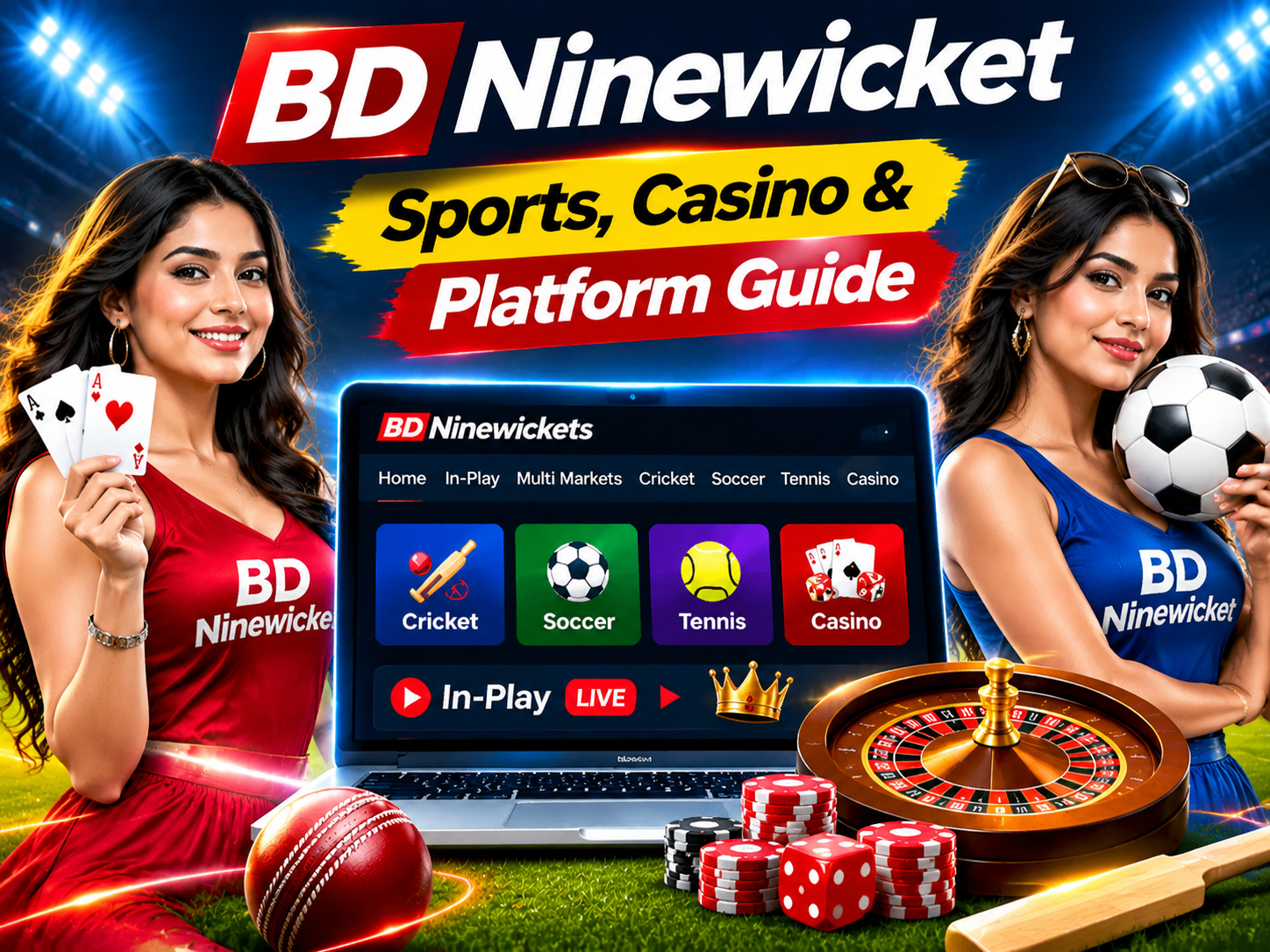
BD Ninewicket: A Guide to Platform Navigation and Digital Features
Finding information on an online platform is not always as straightforward as opening its homepage. Visitors may need to understand different menus, identify relevant categories, recognise available controls and distinguish between informational sections and interactive features. A well-organised interface makes these tasks easier by presenting related functions in a logical order.
BD Ninewicket is a Bangladesh-focused search term associated with the Ninewickets platform. People searching for this keyword may have different questions about the website. Some want to understand its general identity, while others are interested in sports navigation, cricket sections, entertainment categories, account interfaces or mobile access.
Looking at these subjects from the perspective of platform navigation offers a different way to understand the brand. Rather than concentrating on cricket statistics or the technical foundations of sports data, this guide examines how different website features fit together and how visitors can identify the information they are looking for.
The discussion covers navigation patterns, category discovery, event presentation, interactive interface elements, account-related controls, digital entertainment organisation and mobile usability. It also explains common design concepts that help readers understand how an online sports and entertainment platform is structured.
1. Starting Point: Understanding the BD Ninewicket Website Experience
An online platform generally has several entry points. The homepage is usually the main destination, but visitors may also arrive through a category page, a search engine result or a previously accessed section.
BD Ninewicket-related searches are associated with the Ninewickets brand and its online sports and entertainment environment.
The first step in understanding this environment is recognising that different website sections serve different purposes.
A typical platform interface can be examined through four broad areas:
Discovery area: This is where visitors identify the available categories and locate relevant sections.
Sports area: This contains sports-related categories and event information.
Entertainment area: This provides access to separate gaming and entertainment collections.
Account area: This contains controls associated with profile access and account-related navigation.
These areas represent different functions rather than a single continuous activity.
Understanding their separation helps explain the overall website structure without requiring visitors to learn every individual feature at once.
2. Navigation Mapping: Finding the Right Section
Navigation mapping refers to the process of identifying how different pages and features are connected.
For example, a visitor interested in cricket-related information would generally begin with the sports navigation and then identify the cricket category.
Someone researching entertainment categories would follow a different navigation path.
This distinction is important because large online platforms can contain many unrelated sections.
Primary Navigation
Primary navigation contains the main website categories.
On a sports-oriented platform, these may include:
- Homepage.
- Sports.
- In-Play.
- Cricket.
- Soccer.
- Tennis.
- Multi Markets.
- Casino.
The precise menu labels and their placement depend on the active website version.
Secondary Navigation
Secondary navigation provides more specific choices within a main category.
For example, a cricket section may organise events by competition or scheduled match.
Similarly, an entertainment section may group individual titles according to their game format or provider.
Page-Level Navigation
An individual page can contain additional controls.
These may include tabs, information panels, event selectors and navigation links.
The purpose of page-level navigation is to make specific information available without requiring visitors to return to the homepage repeatedly.
Navigation Consistency
A consistent navigation system uses recognisable labels and predictable page structures.
If similar controls appear in different locations on every page, visitors may find the website more difficult to understand.
A predictable layout reduces this confusion and supports easier browsing.
3. Feature Discovery: How Visitors Identify Available Functions
Feature discovery is the process of finding out what a platform offers and where individual functions are located.
It is different from simply knowing that a website contains multiple categories.
For example, someone may recognise the name of a sports platform but remain unfamiliar with its live event section or entertainment lobby.
A good introduction should therefore explain the relationship between features.
Category-Based Discovery
Category-based discovery begins with a broad subject.
Visitors select a sports discipline or entertainment category and then examine the available options within it.
This approach works well when the platform contains several different types of content.
Search-Based Discovery
Some websites provide search tools that help locate particular events or categories.
A search function may be useful when the number of available listings becomes too large to browse manually.
Filter-Based Discovery
Filters narrow a larger collection according to selected conditions.
Depending on the website, these may relate to:
- Sport.
- Competition.
- Event date.
- Event status.
- Content category.
Filters help separate relevant information from unrelated listings.
Featured Content
Some interfaces display selected categories or events more prominently than others.
Featured content can help visitors identify current platform sections without navigating through every available menu.
Its placement and selection can change according to the website’s configuration.
4. Understanding the Sports Navigation Environment
Sports navigation brings different sporting disciplines into a shared website environment.
Although each sport follows its own competition structure, their categories can be organised through a common navigation system.
Ninewickets’ public-facing sports environment is associated with several sporting disciplines, including cricket, football and tennis.
Cricket Navigation
Cricket is a particularly relevant category for Bangladesh-focused searches.
Its competition calendar includes international matches, domestic tournaments and franchise competitions.
Visitors exploring cricket-related pages may encounter:
- Tournament listings.
- Scheduled fixtures.
- Team names.
- Match formats.
- Event information.
- Current match status.
Different cricket competitions can appear throughout the year, so event selection depends on the active sporting schedule.
Soccer Navigation
Football-related sections generally organise information around clubs, national teams and competitions.
A football category may include domestic leagues, international tournaments and continental championships.
Visitors may encounter event details such as team names, match dates and competition information.
Tennis Navigation
Tennis has a different organisational structure.
Its competitions involve individual players or doubles partnerships, and matches are divided into sets and games.
A tennis category can help visitors locate tournaments and individual matches.
Other Sporting Sections
Additional sports may appear depending on the platform’s available coverage.
These can include horse racing and greyhound racing, which use different event formats and participant information.
Separating these disciplines makes the navigation system easier to understand.
5. The In-Play Environment and Event Status
An event’s status determines how it is presented within a sports interface.
Scheduled fixtures and ongoing competitions represent different stages of the sporting calendar.
An In-Play section is associated with events that have already started.
Event Status Identification
An event page may use status labels to communicate its current stage.
Common examples include:
- Upcoming.
- Live.
- Half-Time.
- Completed.
- Postponed.
- Abandoned.
The terminology can differ between sports and platform implementations.
Cricket Event Presentation
Cricket event information may contain innings details, team scores, overs and wickets.
A match can move through several stages, from the scheduled start to the first innings, interval and second innings.
The event status helps distinguish these stages.
Football Event Presentation
Football event pages generally use match periods such as first half, half-time and second half.
Additional information may include goals, match time and completion status.
Tennis Event Presentation
Tennis events can display set progression, game scores and match status.
A match may be marked as ongoing while players continue competing across the required sets.
Why Event Status Labels Matter
Without a clear status indicator, visitors may struggle to determine whether a fixture has started or finished.
Status labels therefore form an important part of sports interface design.
6. Multi Markets: Understanding the Organisation of Event Options
A sporting event can contain several information categories.
The final match result is only one part of the information associated with a competition.
Multi-market navigation groups different market types under a related event.
For example, a hypothetical cricket fixture may contain the following categories:
| Category | Information Focus |
|---|---|
| Match Result | Overall match outcome |
| Innings Information | Runs scored during an innings |
| Player Statistics | Individual performance |
| Team Statistics | Collective team performance |
| Over-Based Information | Statistics from specific overs |
| Wicket Information | Dismissals during a match |
These categories are different ways of describing the same sporting event.
Market Naming
Market names should communicate their intended meaning.
A label referring to a complete match may differ from one describing a particular innings or period.
Market Grouping
Grouping related categories under one event creates a clearer information hierarchy.
Instead of treating every option as a separate sporting fixture, the interface can present them as connected elements.
Market Information Panels
An information panel may display the market name, available options and associated numerical values.
The exact presentation depends on the platform’s interface.
Understanding the difference between event information and individual market information makes navigation more intuitive.
7. Exploring the Entertainment Lobby
Sports sections and casino entertainment sections have different organisational requirements.
A sports section is generally structured around competitions and scheduled events.
An entertainment lobby is organised around game titles, formats and providers.
Ninewickets’ public-facing interface includes a separate casino-oriented environment.
Game Category Organisation
Game libraries commonly group titles according to their format.
Examples of recognised categories include:
- Table games.
- Card games.
- Dice-based games.
- Slot-style entertainment.
- Live dealer games.
- Special interactive formats.
This organisation helps distinguish different types of entertainment.
Individual Game Discovery
Individual titles can appear inside a category or provider collection.
Some titles associated with the platform’s public-facing descriptions include:
Roulette: A traditional wheel-based casino format involving numbered positions.
Baccarat: A card-based game with a scoring structure built around two main hands.
Sic Bo: A dice-based format involving combinations produced by three dice.
Teen Patti: A traditional South Asian card game involving three-card combinations.
Andar Bahar: An Indian card game based on a central card and two possible sides.
Aviator: A digital game title associated with a multiplier-style presentation.
Crazy Time: An interactive live casino game format.
These examples illustrate different entertainment categories rather than confirming that every title is available at all times.
Provider-Based Organisation
A gaming provider is a company or studio associated with developing or supplying digital game products.
Provider collections can contain several titles.
This arrangement allows a platform to organise entertainment content through both game categories and product providers.
8. Account Interface: Understanding the Main Controls
Account-based websites generally contain a separate interface for profile access.
The account section is different from public navigation because its controls are associated with an individual profile.
Login Interface
A login interface commonly contains fields for account identification and authentication.
These may include:
- Username.
- Password.
- Verification field.
- Login control.
The precise design depends on the active website implementation.
Account Dashboard
A dashboard is a central page that groups profile-related functions.
Depending on the platform’s configuration, it may contain account details and other available navigation options.
Profile Settings
Profile settings generally relate to information associated with an account.
Some websites use separate pages for profile details, interface preferences and account-related controls.
Navigation Feedback
An effective interface should communicate whether an action has been accepted.
For example, a login form may display a message when required information is missing.
Clear feedback helps visitors understand what happened after interacting with a control.
9. Interface Design Elements That Shape the Experience
A website’s visual organisation influences how easily its features can be identified.
The same information can be difficult or straightforward to understand depending on its presentation.
Several design elements contribute to this experience.
Visual Hierarchy
Visual hierarchy describes the arrangement of content according to importance.
Headings, section labels and information panels help distinguish major categories from smaller details.
A homepage should make its primary navigation recognisable without requiring visitors to inspect every individual element.
Typography
Typography influences readability.
Text size, font weight, spacing and line length can affect how quickly information is understood.
Sports event names and category labels should remain readable across different screen sizes.
Colour and Contrast
Colours can help distinguish different interface elements.
For example, a website may use contrasting colours for navigation controls, event status labels and information panels.
However, colour alone should not communicate essential information. Text labels and other visual indicators should also be available.
Icons and Symbols
Icons can help identify familiar functions.
A calendar symbol may represent a schedule, while a menu symbol can indicate additional navigation options.
Icons are most useful when their meaning is recognisable and consistent.
Content Spacing
Adequate spacing separates related and unrelated information.
Crowded layouts can make it difficult to distinguish one event from another.
A balanced interface improves readability without requiring unnecessary visual decoration.
10. Mobile Navigation and Touch-Based Interaction
Mobile access introduces different design considerations from desktop browsing.
A smartphone has a smaller display, and navigation generally relies on touch controls.
For Bangladesh-focused searches such as BD Ninewicket, mobile usability is an important subject to understand.
Compact Menus
Mobile interfaces often use collapsible menus to organise navigation.
A visitor can open the menu and select the required category without displaying every option simultaneously.
Vertical Content Layout
Wide desktop layouts may be converted into vertically arranged content on mobile devices.
This allows event information and navigation panels to fit smaller screens.
Touch Interaction
Touch controls should be sufficiently large and separated.
Small buttons placed too close together can create navigation difficulties.
Screen Orientation
Some content may be displayed differently depending on whether a smartphone is held vertically or horizontally.
Responsive interfaces should maintain understandable content in both orientations where supported.
Mobile Browser Experience
Website-based mobile access depends on the browser, device and page implementation.
The actual presentation should be assessed using the current website rather than assuming that a separate mobile application exists.
11. Understanding Website Notifications and Interface Messages
Digital platforms use messages to communicate different types of information.
These messages may appear during navigation, account access or interaction with individual page elements.
System Messages
System messages communicate general website information.
Examples include temporary service notices or page availability messages.
Validation Messages
Validation messages indicate whether entered information meets the requirements of a form.
For example, a form may identify a missing username or an incomplete required field.
Status Messages
Status messages communicate the current condition of an event or interface component.
A live event label and a completed match indicator are examples.
Loading Indicators
Loading indicators show that a page or individual component is processing information.
They help communicate that a requested action is still underway.
Error Messages
An error message indicates that an operation could not be completed as expected.
Clear wording helps visitors understand the general issue rather than leaving them uncertain about what happened.
These communication elements are important parts of a usable online interface.
12. Understanding the Difference Between Website Features and Platform Content
Visitors sometimes confuse a website’s technical features with the content displayed inside it.
Although the two are connected, they describe different things.
Website features are functions that help visitors interact with the platform.
Examples include navigation menus, search controls, filters and account interfaces.
Platform content refers to the information or entertainment presented through those functions.
Examples include cricket events, football fixtures, game titles and competition information.
This distinction is useful when researching BD Ninewicket because the platform contains multiple types of content within a shared website environment.
A Practical Example
Imagine a visitor searching for a particular cricket competition.
The navigation menu is a website feature.
The cricket category is a content organisation mechanism.
The tournament listing is platform content.
The individual match page is a destination containing event information.
Understanding these relationships provides a clearer picture of how a digital platform works.
13. What to Look for When Exploring BD Ninewicket
A structured approach makes it easier to understand an unfamiliar website.
Instead of opening random sections, visitors can examine the platform through a series of general observations.
Identify the Main Sections
Begin by recognising the primary navigation categories.
Determine which options relate to sports, entertainment and account access.
Understand Category Relationships
Look at how individual sections connect to broader categories.
A tournament may appear inside a cricket section, while an individual game may belong to a casino category.
Read Labels Carefully
Category names, event statuses and page headings communicate the purpose of each section.
Understanding these labels reduces confusion.
Compare Desktop and Mobile Layouts
Different screen sizes may present the same information in different arrangements.
Observing both layouts helps explain the platform’s responsive design.
Distinguish General Information from Specific Features
A broad description of the brand does not necessarily confirm the availability of every individual feature.
The current website interface is the appropriate place to verify its displayed options.
Understand the Platform’s Content Structure
Recognise which pages provide general explanations and which ones contain event-specific or entertainment-related information.
This distinction helps visitors navigate more efficiently.
14. How Platform Navigation Relates to Search Engine Optimisation
Search engines organise and present web pages according to their relevance to individual queries.
A platform-related informational article should therefore explain the brand and its associated topics in a clear structure.
Brand-Focused Content
Brand-focused content explains the identity associated with a particular search term.
For BD Ninewicket, this includes the relationship between the regional keyword and the Ninewickets name.
Feature-Focused Content
Feature-focused information explains how individual sections work.
Examples include navigation, sports categories, account interfaces and mobile presentation.
Supporting Topic Coverage
Related topics can provide useful context without changing the article’s central search intent.
For example, a discussion of event status can support an explanation of sports navigation.
Descriptive Headings
Headings should communicate the information contained within each section.
This helps readers scan the article and understand its organisation.
Natural Keyword Placement
The focus keyword should appear where it makes sense, including the title, introduction and relevant body sections.
Alternative brand variations can be used naturally when they improve clarity.
Repeatedly inserting the exact keyword into unrelated sentences does not improve the reader’s experience.
15. Frequently Asked Questions About BD Ninewicket
1. What should someone understand first when researching BD Ninewicket?
The first step is identifying the relationship between the BD Ninewicket search term and the Ninewickets brand. After that, visitors can examine the website’s main sections, navigation structure and available categories.
2. What is the purpose of a platform’s main navigation menu?
A main navigation menu connects visitors with the website’s major sections. It helps separate sports categories, entertainment areas and other important destinations.
3. How are sports categories different from entertainment categories?
Sports categories are generally organised around disciplines, competitions and sporting events. Entertainment categories are usually organised around game formats, individual titles and software providers.
4. What does a featured section mean on a website?
A featured section highlights selected content or categories within the interface. Its purpose is to make certain destinations more visible without requiring visitors to browse the complete website.
5. What is an event status indicator?
An event status indicator communicates the current stage of a sporting event. Common labels include upcoming, live, completed and postponed, depending on the sport and website implementation.
6. What is the difference between a website dashboard and its homepage?
A homepage is generally the main entry point for a website. A dashboard is a central interface that groups specific information or controls, often within an account-based environment.
7. Why do mobile websites use collapsible navigation menus?
Collapsible menus save screen space by displaying navigation options only when required. This helps organise multiple categories within the limited dimensions of a smartphone display.
8. How can visitors understand whether a platform feature is currently available?
The current website interface and its published feature descriptions provide the relevant information. General brand descriptions should not be treated as confirmation that every feature is available in every version.
Conclusion
BD Ninewicket is a brand-related search term that can be understood through the organisation of the Ninewickets digital platform. Its broader website environment brings together sports navigation, event-related sections, entertainment categories and account-oriented interface elements.
Understanding the navigation system provides a practical way to examine the platform. Primary menus identify major destinations, secondary categories organise related content, and individual pages present more specific information.
The entertainment lobby follows a separate structure based on game formats and individual titles, while mobile layouts introduce additional considerations involving screen space and touch interaction.
For readers researching BD Ninewicket, the central point is to understand how the different website components relate to one another. Recognising the distinction between navigation, content, interactive features and account controls provides a clearer picture of the platform’s digital experience.
Keep reading
Related guides
Blog Post
Ninewicket Cricket Bets Review: A Practical Evaluation
Ninewicket Cricket Bets Review: A Practical Evaluation Choosing an online cricket platform requires more than browsing its homepage or reading a brief description of…
Read the guide →
Guide
9Wicket Review: A Complete Digital Platform Analysis
9Wicket Review: A Complete Guide to the Platform Experience Introduction When researching an online entertainment website, visitors often encounter a mixture of promotional pages,…
Read the guide →Blog Post
9Wkts Live Bet: Live Cricket Platform Explained
9Wkts Live Bet: Live Cricket Platform Explained Introduction Following a cricket match online involves much more than checking the final score. Modern digital sports…
Read the guide →Ready to put this guide to work?
Open a 9Wickets account with bKash, Nagad or Rocket, or talk to support if you need a hand.